Dress Kids for Weather: Free Layering Calculator by Age
This post contains affiliate links. As an Amazon Associate we earn from qualifying purchases, at no extra cost to you. Learn more.
It’s 45 degrees, a little breezy, and you’re standing at the closet holding a fleece in one hand and a puffy jacket in the other. Is it too much? Not enough? Learning how to dress kids for weather is one of those parent skills nobody teaches, and the forecast number alone rarely tells you the whole story. Wind, rain, what your child will be doing and how old they are all change the answer.
The free calculator below turns today’s conditions into a layer-by-layer starting point, explains the reason behind each piece, and shows the signs that mean it’s time to head inside. It’s built on published layering principles and children’s cold- and heat-safety guidance, and it’s meant to support your judgment, not replace it.
Quick Answer
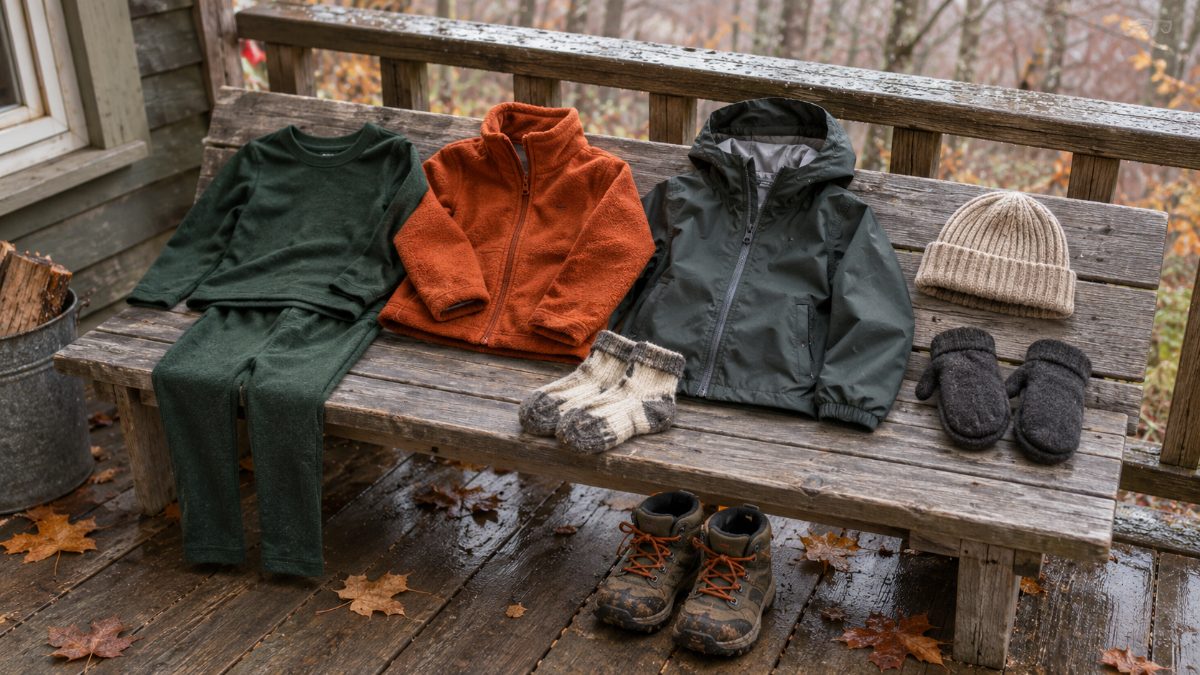
To dress kids for weather, start with three layers: a base layer that moves sweat off the skin, a middle layer that holds warmth, and an outer shell that blocks wind and rain. Then adjust. The American Academy of Pediatrics suggests dressing young children in one more layer than an adult would wear in the same conditions. Check the feels-like temperature, not just the forecast, and watch your child more than the thermometer.
This calculator gives general information only. It is not medical advice and does not guarantee comfort or safety. Please read our Safety Disclaimer before relying on any result.
Enter today’s conditions. You’ll get a layer-by-layer starting point, what to pack, and the signs that mean it’s time to head inside.
How the Calculator Decides How to Dress Kids for Weather
The calculator follows the same logic many parents use instinctively, just written down so it’s consistent. Here’s what happens when you press the button.
Step 1: It works out the feels-like temperature
A 40°F day with a 15 mph wind feels much colder on skin than a calm 40°F day. At 50°F and below, the calculator applies the wind chill formula used by the National Weather Service. At 80°F and above, it uses your humidity choice to estimate the heat index, because humid air makes it harder for the body to cool off by sweating. Between those, it uses the temperature you entered.
Step 2: It places that number in a temperature range
The calculator groups conditions into seven ranges, from hot (80°F and up) down to extreme cold (−15°F to −1°F). We want to be clear about this part: these ranges are our own editorial starting point. No pediatric or outdoor organization publishes an official “wear this at 47 degrees” chart for children. The ranges are built on the three-layer system described by REI Expert Advice and on the cold- and heat-safety thresholds the AAP shares on HealthyChildren.org.
Step 3: It adjusts for your child and your plans
- Age 1 to 5, riding in a carrier or stroller, or sitting around camp: the plan adds one extra layer, following the AAP’s “one more layer than an adult” rule of thumb. It adds a single layer, not a heavier outfit, because overdressing a child brings its own problems.
- Rain: the outer layer becomes a waterproof jacket, and a full change of dry clothes goes on the packing list.
- Snow or snow play: waterproof mittens, boots and snow pants, because kids kneel, sit and roll in it.
- Older kids hiking: a reminder to start a little cool and carry the warm layer for stops.
Step 4: It knows when not to give a plan
If the feels-like temperature is below −15°F, the calculator doesn’t produce an outdoor outfit. The AAP advises avoiding outdoor play in temperatures or wind chills below −15°F, because exposed skin can start to freeze within minutes. On the hot side, it shows a caution at a heat index of 90°F and above, and suggests rescheduling above 105°F, matching the thresholds in the AAP’s extreme heat guidance.
How to Use Your Result on the Trail or at Camp
A layering plan is a starting point you adjust throughout the outing. A few habits make it work in real life.
Do the neck check. Slide a hand inside the collar to the back of your child’s neck. Cool and dry means they’re comfortable. Sweaty means take a layer off. Cold means add one. Hands and feet often feel cold even when a child is warm enough, so the neck tells you more.
Adjust before, not after. Take the fleece off at the bottom of a climb, before your child soaks it with sweat. Put it back on the moment you stop for a snack. Wet base layers are what make kids cold at rest stops.
Treat the spares list seriously. Dry socks and a second pair of mittens weigh almost nothing and solve most cold-weather meltdowns. On a rainy day, a full change of clothes in the car makes the drive home far more pleasant.
Re-run it when conditions change. If clouds roll in, the wind picks up or you decide to stay out for an evening campfire, put the new conditions in and compare. For overnight trips, our guide on keeping a toddler warm while camping covers sleep layers, which this calculator deliberately doesn’t.
Save or print it. The plan on screen is free. If you’d like a printable copy for the packing table or the car, you can unlock one with your email.
Dress Kids for Weather by Age
The layers themselves don’t change much with age. What changes is how well your child can tell you they’re uncomfortable and how much they can manage on their own.
| Age | What to keep in mind | Your job |
|---|---|---|
| Under 1 | Can’t tell you anything; relies fully on you | One more layer than you, short outings, ask your pediatrician |
| 1–3 | Often carried or in a stroller; can’t explain cold or heat | One extra layer, frequent neck checks |
| 3–5 | Says “I’m fine” while having fun | Check hands, ears and neck at every stop |
| 6–9 | Can work zippers and notice discomfort | Teach a “too hot, too cold, just right?” check |
| 10–12 | Can manage their own layers | Let them pack from the list, then double-check |
For babies under 1, the calculator intentionally gives only general guidance: the AAP’s one-more-layer rule, thin layers in the car seat and a reminder to ask your pediatrician. It doesn’t give sleep advice. Infant sleep has its own safety rules, and your pediatrician is the right person for those.
For a deeper look at the cold end of the range, our guide on how to layer kids for cold-weather hiking walks through each layer by age, including fabrics and fit.
Our Picks: Three Pieces That Make Layering Easier
You don’t need special gear for most outings. These are three pieces the calculator mentions most often. We compared listings, materials, size ranges and verified owner feedback; we have not tested them ourselves. Always check the size chart for your child.
A synthetic base layer. The Rocky kids’ fleece-lined thermal set is a polyester and spandex top and bottom set sold in sizes from 12–18 months to 16. It’s for cold-day hikes and snow play, when cotton long johns would stay damp. The main drawback: the brushed lining is warm, so on milder days it can be too much for an active kid.
A waterproof rain shell. The Columbia Youth Glennaker Rain Jacket has a waterproof nylon shell and comes in sizes from 2T up to youth XL. It works as the outer layer over a fleece in cool, wet weather. The drawback: it’s a simple shell with no insulation, so on cold days it needs warm layers underneath.
Waterproof mittens. The N’Ice Caps waterproof Thinsulate mittens come in sizes from 1–2 years to 10–12 years and have a wide opening that makes them easier to get on small hands. They suit snow play and cold walks. The drawback: like any mitten, they make zippers and snacks harder for older kids who want finger dexterity.
Footwear matters too, but it depends more on the trail than the temperature. See whether kids need hiking boots before buying a dedicated pair.
Common Layering Mistakes
- Cotton next to the skin on cold or wet days. REI notes that cotton soaks up moisture and can chill you in winter. A cotton T-shirt is fine for a short, dry outing, but on a long cold hike a synthetic or wool base layer stays warmer once your child sweats.
- One giant coat instead of layers. Several thin layers trap warm air and can be adjusted. A single thick coat is either on or off.
- Overdressing an active child. A sweaty child becomes a cold child the moment they stop. If the back of the neck is damp, remove a layer.
- Tight layers. If the outer jacket squeezes the fleece underneath, it insulates less, and tight boots make toes colder, not warmer.
- A puffy coat in the car seat. The AAP advises thin, snug layers in a car seat, with the coat or a blanket added over the buckled harness.
- Forgetting that wet beats warm. Changing out of wet clothes right away matters more than adding another layer on top of them.
Safety Notes
No clothing plan removes the risk of cold or heat. Children lose heat faster than adults and, when they’re having fun, may not come inside on their own. Trust what you see in your child over what any tool says.
Cold. According to the AAP on HealthyChildren.org, frostbite usually affects fingers, toes, ears and the nose; the skin may burn, then go numb and turn white or grayish. Bring your child inside, warm the area gently without rubbing, and call your pediatrician if pain or numbness lasts more than a few minutes. Hypothermia starts with shivering and can progress to sluggishness, clumsiness or slurred speech. It is a medical emergency: call 911, get your child indoors, remove wet clothing and wrap them in warm layers.
Heat. The AAP’s extreme heat guidance recommends contacting your pediatrician right away if a child shows signs such as fainting, extreme tiredness, confusion, loss of coordination, fever, nausea or vomiting, or faster breathing after time in the heat, and those signs don’t improve quickly somewhere cool. Heat stroke is a medical emergency. If your child is confused, collapses or is hard to wake, call 911.
Gear. Follow the manufacturer’s instructions, sizing and age guidance for every item, including carriers, which may fit differently over bulky layers. Check local weather alerts before you go and turn back early if conditions change.
Safety note: This article and calculator are for general information only. They are not medical advice, do not guarantee your child’s comfort or safety, and cannot account for your child’s health, the exact conditions or the gear you use. Always follow the manufacturer’s instructions, weight limits and age guidance for any gear, and talk to your pediatrician about your child’s specific health needs. In an emergency, call 911. See our full Safety Disclaimer and Terms of Use.
Frequently Asked Questions
What should a toddler wear in 40 degree weather?
For an active outing around 40°F, a good starting point is a long underwear base layer, a fleece, a waterproof or wind-resistant jacket, a warm hat, gloves or mittens and warm socks, plus one extra layer such as fleece pants or a vest, following the AAP’s one-more-layer rule for young children. Wind or rain makes it feel colder, so run your exact conditions through the calculator and check the back of the neck once you’re out.
How many layers should a child wear?
In cool or cold weather, three layers (base, middle and outer) cover most situations, with young children often needing one more than an adult would wear. In mild weather, one layer plus a light jacket in the bag is usually enough. In hot weather, one light, loose layer is best. The number matters less than whether your child stays dry and comfortable.
How can I tell if my child is too cold or too hot?
Feel the back of the neck or the chest. Cold hands alone aren’t a reliable sign. Shivering, complaining, unusual quietness or clinginess suggest they’re getting cold. A sweaty neck, flushed cheeks, crankiness or unusual tiredness suggest they’re too warm. If you’re unsure, adjust a layer and check again in a few minutes.
Is fleece warm enough for kids in winter?
Fleece is a good middle layer, but on its own it lets wind straight through and soaks up snow. In cold or wet conditions, pair it with a wind- and water-resistant shell on top and a base layer underneath. On very cold days, many families add an insulated puffy over the fleece at rest stops.
Does this calculator work in Celsius?
Yes. Tap °C next to the temperature box and enter the forecast in Celsius. The results show both units. Wind is entered in simple categories, so you don’t need to convert km/h to mph.
Final Thoughts
Dressing kids for the weather gets easier with practice, and most of it comes down to a few habits: three adjustable layers, one extra for little ones, dry spares in the bag and frequent neck checks. Use the calculator as a starting point, then trust what your child shows you on the trail. If you’re heading out on a cold hike next, our guide on layering kids for cold-weather hiking goes deeper on each layer.